
Recycling disposable coffee capsules: myth or reality?
Following a massive surge in environmental awareness over the last decade, single-use coffee capsules have been heavily criticized for their negative impact on the environment. They're being called an ecological disaster, which says it all.
Some figures to start with: every minute, approximately 39,000 capsules are manufactured worldwide, of which 29,000 end up in landfills, representing three-quarters of all capsules. This equates to roughly 20 billion capsules produced each year, of which 15 billion are discarded into the environment.
While most brands haven't done much so far (financial conflict of interest - obviously), one of them has decided (or rather felt obliged) to implement an ambitious recycling program: Nespresso. Of course.
But what are they actually doing in terms of recycling? Is it really effective?
Analysis.
A giant making... limited efforts
Buy, brew, throw away. George Clooney launched his campaign in 2006. Fifteen years later, the world leader in disposable coffee capsules is stronger than ever. In Western Europe, pods and capsules represent a third of the coffee market (approximately €20 billion), and this sector is experiencing impressive growth: 9% per year since 2011, compared to 1.6% for the coffee market in general, according to an analysis obtained from Rabobank.
"What we are seeing with coffee pods is a worrying example of the linear, disposable, single-use society that many of us would like to see become circular," says David Newman, an international waste management expert and chief executive of the Biobased and Biodegradable Industries Association.
So here it is, a new wave of compostable Nespresso-compatible capsules has arrived, offering excellent coffee in convenient and environmentally sustainable packaging. But it's not that simple...
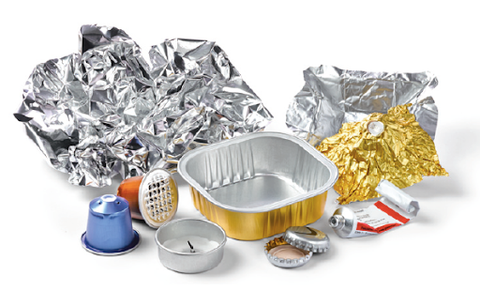
Coffee capsules and pods are generally made from materials such as aluminum and polypropylene, which are indeed recyclable (in the case of aluminum, infinitely) but which, most of the time, are not recycled .
What are the limits?
The fact that they are often made of both plastic and aluminum makes them difficult to recycle, Hamburg city officials told the Telegraph. In other words, they'll end up in a black bag, buried, or incinerated. So much for the planet. Hamburg has therefore simply banned the sale of disposable capsules in the city's supermarkets.
This problem is also found in disposable cups, where the fusion of two different materials creates a challenge for recycling companies. City councils generally do not collect cups or bottle caps, so it is up to the producers to find alternatives.
The Nespresso recycling network
Nespresso, which has borne the brunt of criticism regarding its capsules given its considerable market share, has launched its own recycling program
in 1991.
Customers in 44 countries can now bring their used capsules to one of 120,000 collection points worldwide. What have the results been over the past 30 years? Nespresso doesn't know. "We're trying to find a way to measure [the rates] more accurately because I think we should be reporting on them," explains Katherine Graham, the brand's head of communications.
This is hard to accept, especially since Nespresso has already disclosed that 25 million Swiss francs (approximately 23.5 million euros) are invested in the project each year – and according to the Clean Ocean Project, "recycled aluminum cannot be used to manufacture new capsules." This is why Nespresso (and its competitors) still needs primary aluminum. It's a shocking flaw, both economically and environmentally.
Mark Hilton, a resource utilization expert at the consultancy Eunomia, has a term for it. "It's greenwashing," he says bluntly. Mark suggests it's a way to divert attention and delay potential regulation, and he's not alone in his suspicions. Others we spoke to suggest recycling rates are unlikely to exceed 5% and consider the project "completely absurd." Without any statistics provided by Nespresso in today's data-driven world, it's hard not to be wary—and those promoting compostable products know this.
They would surely shout it from the rooftops if the project were successful.